
Overview
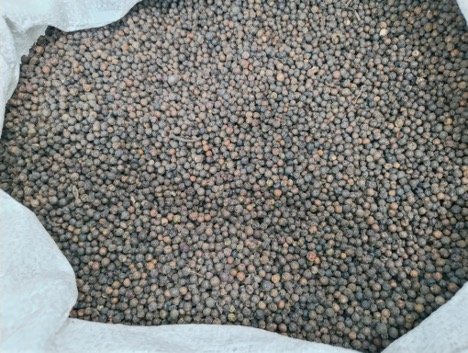
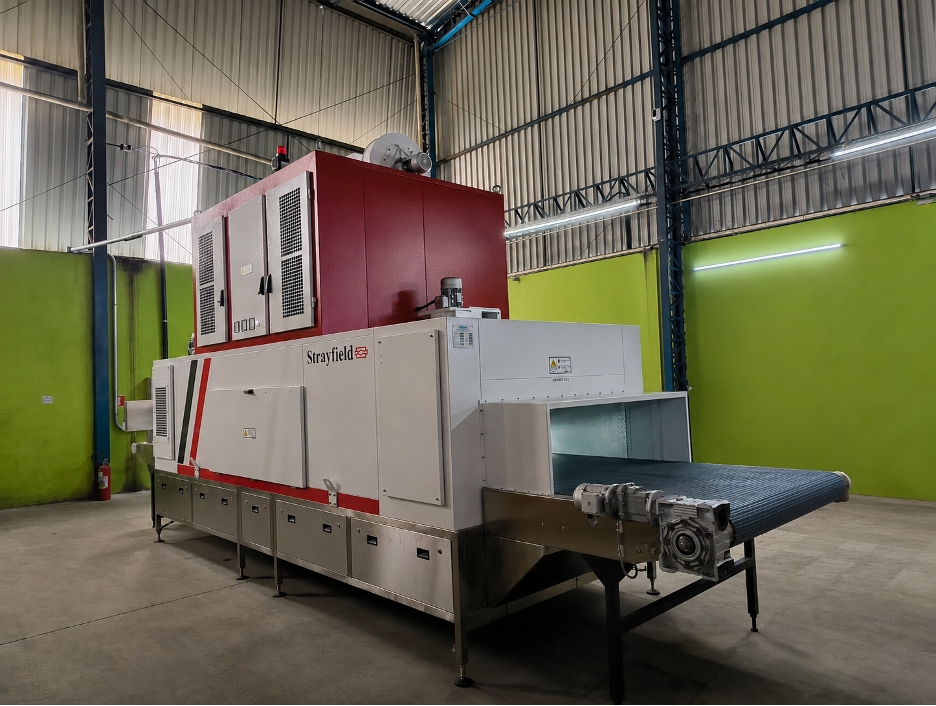
A leading spice processor in South America approached Strayfield to evaluate the suitability of Radio Frequency (RF) technology for heating black pepper in a continuous processing environment. The objective was to assess the ability of RF energy to rapidly raise product temperature while maintaining efficient throughput and handling characteristics suitable for industrial spice processing.
The Challenge
Black pepper is one of the world’s most widely traded spices and often requires controlled thermal processing, or pastuerisation , as part of quality assurance and food safety programs. Conventional heating methods can be time-consuming and may struggle to deliver uniform temperature distribution throughout bulk-packed products.
In addition to achieving effective pasteurisation , the processor sought a solution that would minimise product handling throughout the process. Conventional processing methods often require product transfer between containers or processing stages, increasing the risk of contamination and creating additional handling requirements. The customer wanted to evaluate whether RF technology could process black pepper directly in its packed bags while maintaining efficient heating performance.
The processor sought a solution capable of:
- Rapidly increasing product temperature
- Supporting continuous production
- Processing bagged material efficiently
- Delivering uniform volumetric heating
Trial Parameters
The trial was conducted using Strayfield Radio Frequency technology under the following operating conditions:
Parameter | Value |
Product | Black Pepper |
Product Loading Layout | 2 × 2 Bags (4 bags/meter) |
Conveyor Speed | 10 m/hr |
Bag Weight | 25 kg |
Initial Product Temperature | 26°C |
Final Product Temperature | 80°C |
Production Rate | 100 kg/hr |
Product Dimensions (LBH) | 700 × 510 × 130 mm |
Results
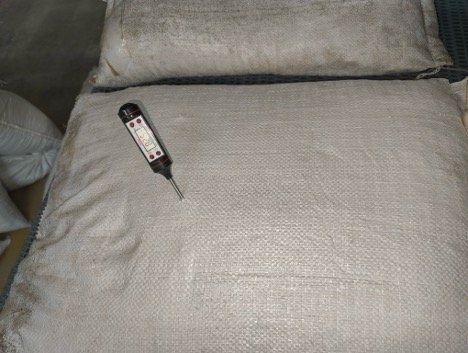
The RF system successfully increased the temperature of black pepper from 26°C to 80°C during continuous processing.
Key outcomes included:
- Temperature output of 80°C achieved during processing
- Continuous operation at 100 kg/hr throughput
- Efficient handling of 25 kg bags
- Consistent heating performance across the product load configuration
- Processed directly in packed bags, reducing contamination
The results demonstrated the ability of Radio Frequency energy to deliver rapid volumetric heating throughout the product mass, making it well suited for spice pasteurisation applications requiring controlled thermal treatment.
A key benefit demonstrated during the trial was the ability to process black pepper directly within its packed bags. By eliminating the need for intermediate product handling, the RF process helps reduce the risk of contamination, improves hygiene control, and simplifies product flow through the production line.
Why Radio Frequency for Spices?
Unlike conventional surface heating methods, Radio Frequency technology generates heat volumetrically within the product. This enables faster and more uniform temperature development throughout the material.
For spice processors, RF technology can offer:
- Faster processing times
- Improved temperature uniformity
- Continuous production capability
- Reduced dependency on prolonged thermal exposure
- Scalable industrial operation
Conclusion
The trial successfully demonstrated the capability of Strayfield Radio Frequency technology to efficiently pasteurise black pepper in a continuous production environment. By achieving a temperature increase from 26°C to 80°C while maintaining a throughput of 100 kg/hr, the system showcased its potential for industrial spice heating and thermal processing applications.